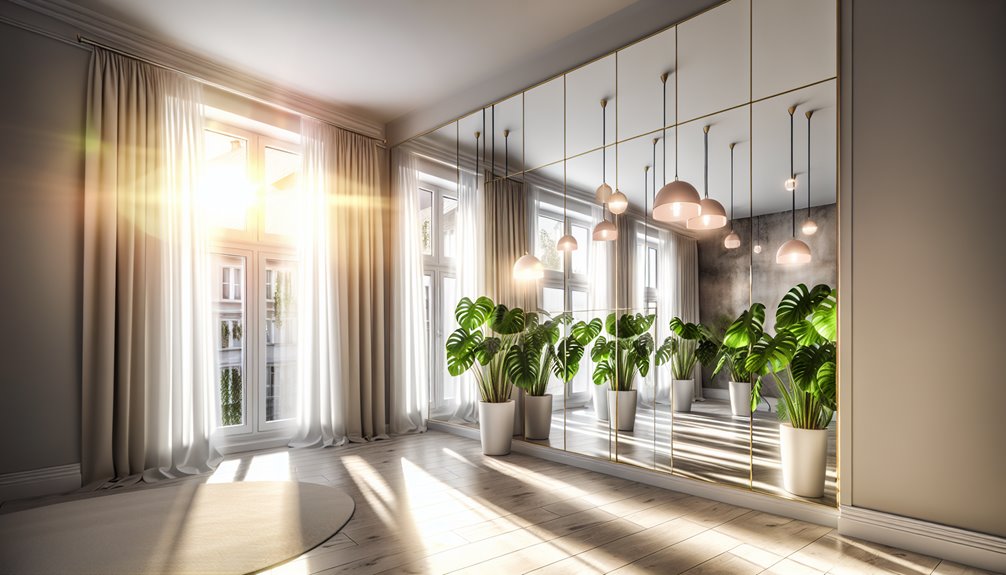
To enhance indoor lighting efficiency, start by switching to energy-efficient LED bulbs; they last longer and consume less energy than traditional bulbs. Next, optimize natural light by positioning mirrors and light-filtering curtains to brighten dark areas. Consider installing smart lighting systems, which allow you to control lights remotely and schedule them to save energy when you're not home. Rearranging your furniture to maximize light flow is also vital. Finally, use reflective surfaces to amplify light without creating glare. By following these tips, you'll improve both the ambiance and efficiency of your indoor spaces, and there's more to explore on this topic.
Key Takeaways
- Replace incandescent bulbs with energy-efficient LED bulbs to save on energy bills and reduce replacement frequency.
- Optimize natural light by positioning mirrors and using light-filtering curtains to enhance brightness in your space.
- Implement smart lighting systems for automated control and scheduling, minimizing energy waste when not at home.
- Adjust room layouts by moving furniture away from windows and using lighter colors to maximize light reflection.
- Incorporate reflective surfaces, such as mirrors and light-colored materials, to amplify natural light and create a brighter atmosphere.
Choose Energy-Efficient Bulbs
When you're looking to enhance your indoor lighting efficiency, choosing energy-efficient bulbs is a crucial step. One of the best options available today is LED bulbs. They offer significant LED advantages over traditional incandescent bulbs, such as lower energy consumption and longer lifespans. By switching to LED, you can reduce your electricity bills and contribute to a more sustainable environment.
The lifespan of LED bulbs is another compelling reason to consider them. Unlike regular bulbs, which typically last about 1,000 hours, LED bulbs can last up to 25,000 hours or more. This means fewer replacements, saving you both time and money in the long run. You won't have to worry about frequently changing bulbs, which can be a hassle.
However, not all energy-efficient bulbs are created equal. It's essential to look for ENERGY STAR ratings or similar certifications to ensure you're getting truly efficient products. While the initial cost may be higher, the savings on your energy bill and the longer lifespan make LEDs a smart investment. In summary, by choosing energy-efficient bulbs, you'll not only improve your indoor lighting efficiency but also enjoy the benefits of longevity and reduced energy costs.
Optimize Natural Light
Maximizing the use of natural light can significantly enhance your indoor lighting efficiency alongside choosing energy-efficient bulbs. By making the most of sunlight, you can reduce reliance on artificial lighting, which not only cuts down energy costs but also creates a more pleasant living environment. Here are some effective strategies to optimize natural light:
- Position mirrors strategically to reflect light and brighten dark areas.
- Choose light filtering curtains that allow sunlight to enter while reducing glare.
- Install skylights to bring in additional daylight, especially in rooms that lack windows.
- Keep windows clean to ensure unobstructed light flow into your space.
- Trim exterior trees or shrubs that may block sunlight from entering your home.
Incorporating these methods can dramatically improve the brightness and ambiance of your indoor spaces. However, remember that while natural light is beneficial, too much direct sunlight can lead to overheating and furniture fading. Striking a balance is essential. By optimizing natural light, you create a more energy-efficient and inviting atmosphere, enhancing both comfort and sustainability in your home.
Utilize Smart Lighting Systems
Smart lighting systems can transform your indoor environment, making it more efficient and tailored to your needs. By incorporating smart home integration, you can control your lighting from anywhere using your smartphone or voice commands. This means you're not just adjusting brightness; you're optimizing energy usage.
One of the most beneficial features is automated scheduling. You can set your lights to turn on and off at specific times, ensuring you never waste energy when you're not home. For instance, you can program your lights to turn off at bedtime and gradually brighten as you wake up, mimicking the natural rising sun. This not only saves energy but also enhances your daily routine.
However, while smart lighting offers convenience, it's crucial to be mindful of its setup. Ensure your network is secure to prevent unauthorized access, which could lead to privacy concerns. Additionally, consider the initial investment in smart bulbs and devices, but remember that the long-term savings on energy bills often make it worthwhile.
Adjust Room Layout
Adjusting your room layout can significantly enhance lighting efficiency and create a more inviting atmosphere. By carefully considering your furniture arrangement, you can improve space flow and maximize natural and artificial light within the room. Here are some tips to help you optimize your layout:
- Position furniture away from windows to allow natural light to flood in, reducing the need for additional lighting.
- Use lighter-colored furniture to reflect light rather than absorb it, creating a brighter environment.
- Create open pathways for light to travel freely, avoiding blockages that can lead to dark corners.
- Group seating areas to encourage conversation while ensuring that light sources are easily accessible for everyone.
- Consider multi-functional furniture that can be moved or adjusted based on different lighting needs, adapting to various activities throughout the day.
Implement Reflective Surfaces
Incorporating reflective surfaces throughout your space can dramatically boost lighting efficiency and brighten the overall ambiance. By adding elements like mirrored furniture, you create a sense of openness and light, making any room feel larger and more inviting. These surfaces bounce light around the room, reducing the need for excessive artificial lighting during the day.
When choosing reflective materials, opt for those in light color. Light-colored walls, ceilings, and furnishings will enhance the effect of natural light, amplifying its presence. Ensure that your reflective surfaces are strategically placed to maximize light reflection; for instance, position mirrors opposite windows to capture and redirect sunlight.
Be cautious, though. Too many reflective surfaces can create glare or a disorienting effect, so balance is key. Additionally, keep in mind that while mirrored furniture and decor can enhance your space, they should complement your overall design aesthetic.
Frequently Asked Questions
How Often Should I Replace My Energy-Efficient Bulbs?
You should replace your energy-efficient bulbs based on their bulb lifespan, which typically ranges from 10,000 to 25,000 hours. A replacement schedule every few years helps maintain optimal lighting and energy efficiency in your space.
What Color Temperature Is Best for Indoor Lighting?
When choosing color temperature, consider your lighting design's purpose. Warmer temperatures (2700K-3000K) create a cozy atmosphere, while cooler temperatures (4000K-5000K) enhance focus and clarity. Select based on the mood you want to achieve.
Do Plants Affect Indoor Lighting Efficiency?
Yes, plants do affect indoor lighting efficiency. They thrive on natural light and can improve air quality, making your space feel brighter. Consider plant lighting to optimize their growth while enhancing your indoor atmosphere and overall lighting quality.
Can Indoor Lighting Impact Mood and Productivity?
Indoor lighting significantly impacts your mood and productivity. Thoughtful lighting design, incorporating natural light, can create a more inviting atmosphere, boosting your energy levels and focus, ultimately enhancing your overall well-being and efficiency throughout the day.
What Are the Safety Considerations for Smart Lighting Systems?
When considering smart lighting systems, you should prioritize smart bulb security and regular lighting system maintenance. Ensure your network's secure, update software frequently, and inspect bulbs for any wear to maintain both safety and functionality.